
Not every builder who does poor work is running a deliberate scam. But a significant minority of the contractors who cause problems for householders are not simply incompetent or disorganised — they are knowingly misrepresenting who they are, what they can do, and what they intend to do with the money they take. Recognising the signs of a deliberate scam early, before significant money has been paid, can prevent the most serious losses.
This article explains the red flags most associated with contractor fraud, so that you can assess whether a tradesperson you are dealing with or considering engaging shows warning signs.
Before the Work Starts
Cold call or doorstep approach: a contractor who approaches you unsolicited — at your door, in a car park, after noticing your property — and offers to carry out work you had not specifically been seeking is a consistent red flag. Rogue traders frequently identify targets this way, taking advantage of the fact that the householder has not had time to compare prices or verify the contractor’s credentials.
Urgency pressure: a contractor who insists the work must be done immediately, that the problem is far worse than you realise and cannot wait, or that the special price is only available today, is using sales pressure techniques associated with scams. Legitimate contractors generally do not need to create artificial urgency.
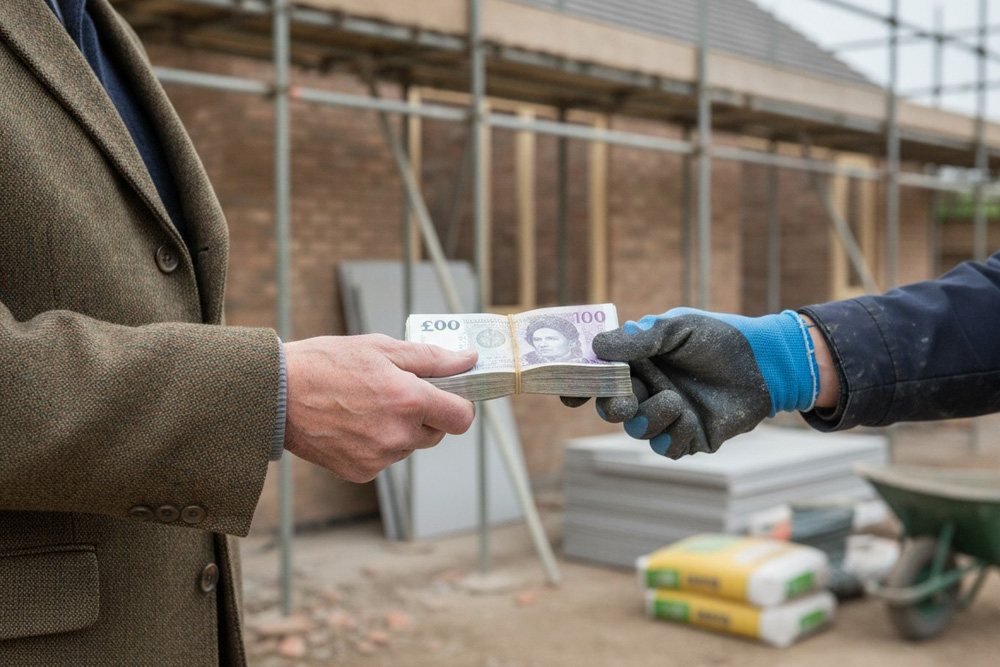
Cash only, no receipt: a request for payment in cash, with no written quote or receipt provided, makes the transaction very difficult to trace or dispute later. Legitimate businesses provide written quotes and proper receipts.
No fixed address or verifiable contact details: a contractor whose business address turns out to be a residential address they no longer live at, a PO box, or an address that cannot be verified, is concealing their real location. A mobile number only, with no landline or business address, is a similar warning sign.
Pressure to decide on the spot before you can check references: a legitimate contractor will be happy for you to check their reviews and contact previous clients. A rogue trader will try to prevent this.
During the Work
Repeated requests for additional payment before completion: requests for additional money before the agreed work is finished, justified by unexpected problems or additional materials, are one of the most common patterns in contractor fraud. A small initial payment grows through a series of additional demands into a much larger total.
Substandard materials or obvious shortcuts: work that does not look right, materials that do not match what was specified, or shortcuts that are visible even to a non-expert eye.
Work being stopped and the contractor becoming difficult to contact: work that stalls, with the contractor giving vague excuses about materials, subcontractors, or other commitments, while remaining contactable only intermittently.
Red Flags in Communications
Inconsistencies in the company name, the name on invoices, and the name on communications: a contractor who operates under different names in different contexts is often managing multiple trading identities.
Reluctance to put anything in writing: a preference for verbal agreements over written quotes, verbal assurances over written guarantees, and resistance to email in favour of calls.
Responses to complaints that blame the client rather than acknowledging the problem: an immediate aggressive or deflecting response to any expression of dissatisfaction is a pattern associated with dishonest contractors who know their work is not defensible.
Concerned about a contractor you have engaged or are considering engaging? Contact ARF Private Investigators for a background check.